Mixing heirloom antiques with crisp modern silhouettes gives your home depth, warmth, and unmistakable character. Yet combining materials from different centuries exposes wood, glue, and textiles to hidden indoor moisture stress.
Without steady humidity control, winter heating shrinks antique veneers while summer dampness accelerates chemical off-gassing from new composite boards. Protecting your curated spaces requires styling choices rooted in building science.
Use these eight designer strategies to blend vintage finds and contemporary pieces seamlessly across every room. You will achieve an effortless, collected look while keeping your indoor air healthy and delicate finishes intact.
Why Microclimate Control Defines Eclectic Interior Design
Picture a sunlit living room anchored by a low-profile linen sofa beside an ornate nineteenth-century walnut chest. Cool air glides around clean metal legs, and subtle amber light grazes hand-rubbed patina without bleaching a single grain.
That effortless harmony depends on quiet climate stability rather than luck alone. When you manage indoor moisture, you protect antique joinery and contemporary upholstery in the exact same breath.
Designers increasingly favor this curated contrast over showroom uniformity. In the November 2025 Interior Designer Trends Survey of 468 global professionals by 1stDibs, vintage pieces, maximalism, and eclecticism ranked among the top choices.
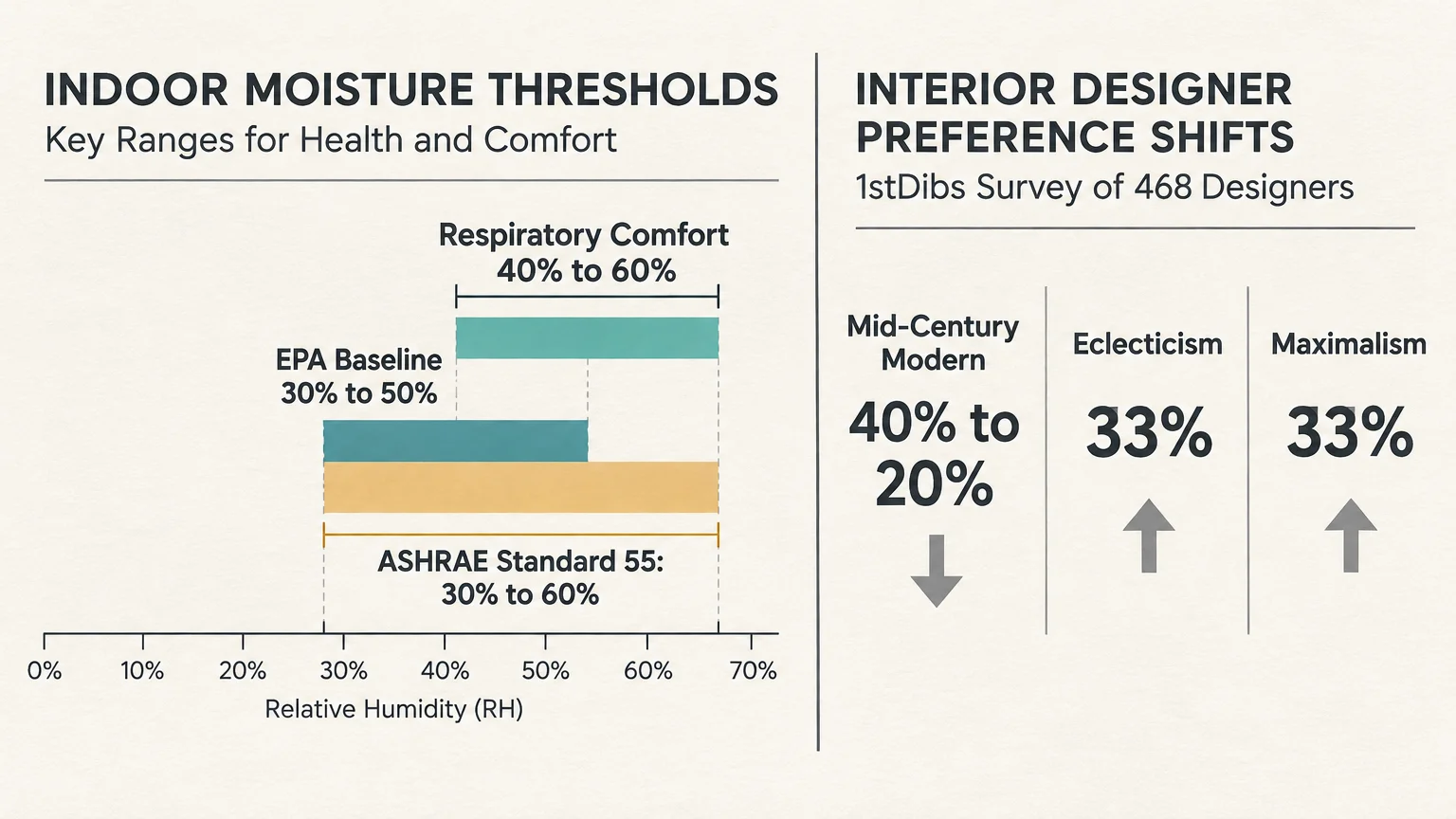
The survey’s 2025 edition noted mid-century modernism dropping from 40% to 20% while one-third of designers championed eclecticism and 33% favored maximalism. Mixing eras clearly resonates with homeowners who crave personal storytelling.
Before arranging a single chair, check your room’s baseline moisture with a calibrated hygrometer. The U.S. Environmental Protection Agency recommends keeping indoor relative humidity between 30% and 50%, and never sustained above 60%, to prevent mold and discourage dust mites.
Heating seasons bring slightly wider comfort boundaries for occupied rooms. According to ASHRAE Standard 55, maintaining 30% to 60% relative humidity supports thermal comfort, while public health guidance points to 40% to 60% for minimizing respiratory irritation.
When you pair stylish furniture layering with steady air quality targets, your room feels calmer and smells fresher. Every piece—whether crafted last month or a century ago—settles comfortably into its shared environment.
1. Anchor Rooms with the 80/20 Styling Ratio and Safe Materials
Balancing Visual Weight Without Triggering Off-Gassing
Professional stylists avoid visual chaos by applying the 80/20 styling ratio across a room. You dedicate 80% of your space to one cohesive foundation—such as clean-lined modern upholstery—and reserve 20% for bold antiques or contrasting eras.
This ratio works equally well in reverse when historic architecture dominates your home. Four-fifths traditional silhouettes paired with one-fifth sculptural contemporary lighting feels intentional rather than accidental.
From an indoor air quality perspective, what makes up your 80% base matters tremendously. Brand-new furniture built from composite wood—such as medium-density fiberboard, particleboard, or hardwood plywood—releases volatile organic compounds into your breathing zone.
Under TSCA Title VI regulations, new composite wood products sold in the United States must meet federal formaldehyde emission limits, though EPA data notes that medium-density fiberboard emits the most due to its high resin-to-wood ratio. The U.S. EPA indoor air quality program estimates the indoor half-life of formaldehyde off-gassing from new articles at 1.5 to 3 years.
By contrast, authentic antiques—formally defined by U.S. Customs and Border Protection and the Endangered Species Act as articles over 100 years old—have long finished off-gassing. Choosing solid vintage casegoods for your statement 20% naturally trims your home’s chemical load.
Watch your humidity closely whenever new pressed-wood bookcases or media consoles dominate that 80% foundation. Research from the California Air Resources Board, Health Canada, and OSHA confirms that elevated heat and humidity accelerate chemical emissions, with engineered wood releasing 30% to 50% more in humid, unventilated rooms.
Keep your thermostat moderate and hold relative humidity below 50% during the first three years after buying new composite furniture. Open windows during dry, mild mornings to flush stale air away from polished vintage tables.
2. Apply the Two-Thirds Proportion Rule for Visual Balance
Scaling Art, Rugs, and Coffee Tables Across Eras
Even priceless pieces look awkward when their proportions clash against neighboring furniture. Designers rely on the two-thirds proportion rule to link heavy antique forms with sleek modern profiles effortlessly.
When hanging framed artwork above a modern sofa, select a piece or tightly grouped arrangement spanning roughly two-thirds of the sofa’s width. Over an 84-inch sofa, aim for art around 56 inches wide, positioned with its bottom edge 6 to 8 inches above the backrest.
Apply that same two-thirds guideline when pairing an heirloom coffee table with a contemporary sectional or anchoring a dining table over a woven rug. Shared geometry tricks the eye into reading wildly different decades as unified partners.
Proper scaling also prevents microclimate traps around sensitive artwork and frames. Oversized canvases jammed flush against damp exterior walls often develop hidden condensation and foxing along the backing board.
Use small felt or silicone bumpers on the lower corners of antique oil paintings and modern prints alike. That millimeter gap encourages gentle convective airflow behind the frame while keeping silhouettes crisp.
If your budget limits large-scale art purchases, hang three matching modern mats containing vintage botanical prints in a disciplined horizontal row. You capture the two-thirds footprint affordably while keeping vulnerable paper safely behind glass.
3. Match Timber Ages and Hide Glues to Stable Relative Humidity
How Pre-1940s Joinery Reacts to Moisture Swings
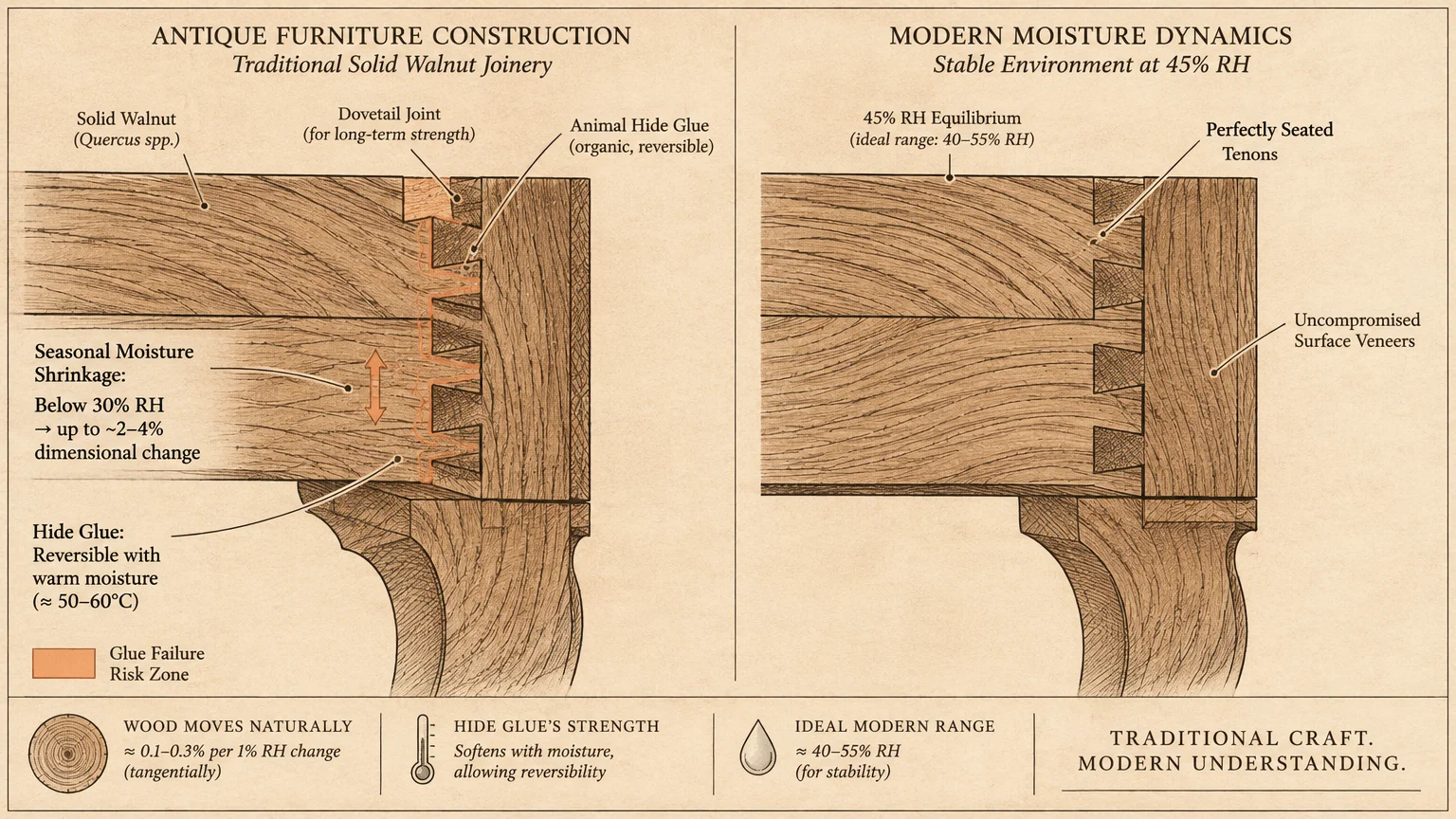
Wood never truly stops breathing inside your living room, regardless of how thick the lacquer appears. According to the USDA Forest Products Laboratory, interior furniture-grade wood stabilizes at 6% to 8% moisture content inside conditioned homes averaging 30% to 50% relative humidity.
Surface stains, wax, and polyurethane slow moisture exchange down, yet they never seal wood completely against seasonal swings. When indoor air turns parched or muggy, solid boards swell across the grain and pull tightly against rigid joints.
Age introduces an invisible structural divide between pre-war heirlooms and mid-century or contemporary finds. The National Park Service Museum Management Program notes that furniture built before the 1940s typically relies on protein-based animal glues such as hide or fish glue.
Unlike synthetic resin glues introduced after the 1940s, traditional animal glues are water-soluble and highly sensitive to moisture extremes. Prolonged dampness softens those antique bonds until chair rungs loosen, whereas severe winter dryness makes old glue brittle enough to snap.
Veneered and inlaid pieces face even steeper risks when paired with modern climate habits. The Canadian Conservation Institute explains that high-humidity spikes invisibly crush tight joints and panels in eighteenth- and nineteenth-century veneered or marquetry furniture, causing unsightly splits once the air dries out again.
Aim for consistency rather than chasing perfection on a digital dial. The Smithsonian Museum Conservation Institute advises keeping wooden furniture within 40% to 60% relative humidity—around 50% at 65°F to 73°F works well in homes—and warns against rapid 20-percentage-point swings.
Health Canada similarly emphasizes keeping homes between 30% and 50% relative humidity to protect both woodwork and lung health. Dropping below 30% shrinks antique planks and splits veneers, while exceeding 55% invites mold and bacteria across porous surfaces.
If you live in a historic home with drafty radiators, avoid placing prized marquetry chests or gilt mirrors directly beside heat vents or baseboards. Shift pre-1940s timber toward interior walls where temperatures remain steady day and night.
4. Honor Architectural Clearances to Boost Airflow
Spacing Mixed Silhouettes for Comfort and Evaporation
Crowding furniture tight against walls and neighboring silhouettes suffocates both your room’s visual rhythm and its air circulation. Professional spatial clearances create effortless traffic lanes while eliminating stagnant pockets where dampness lingers.
Start in your seating zone by leaving 14 to 18 inches between the front edge of your sofa and your coffee table. Keep the coffee table top level with, or within 2 inches of, the sofa seat cushion height so reaching drinks feels natural.
Main walkways threading through living areas need 36 inches of clear passage, though 18 inches serves occasional single-person access behind an accent chair. Around dining tables, reserve 30 inches from the table edge to pull chairs back, expanding to 39 inches if guests walk behind seated diners.
In bedrooms, maintain 24 to 30 inches of breathing room along the sides of your bed frame. That clear perimeter prevents modern upholstered headboards and antique nightstands from trapping humid air against drywall.
Pull heavy vintage armoires and low modern credenzas at least two inches away from exterior walls, especially in humid coastal climates. That narrow shadow gap lets conditioned air sweep behind timber backs, preventing musty odors and peeling veneer.
Elevating furniture on tapered modern legs or turned antique feet offers an immediate airflow advantage over solid plinth bases. Light flows beneath the frame, visually expanding compact apartments while preventing damp carpet fibers from wicking moisture into raw underside wood.
5. Layer Vintage Textiles and Modern Upholstery Safely
Protecting Natural Fibers from Biological Stress
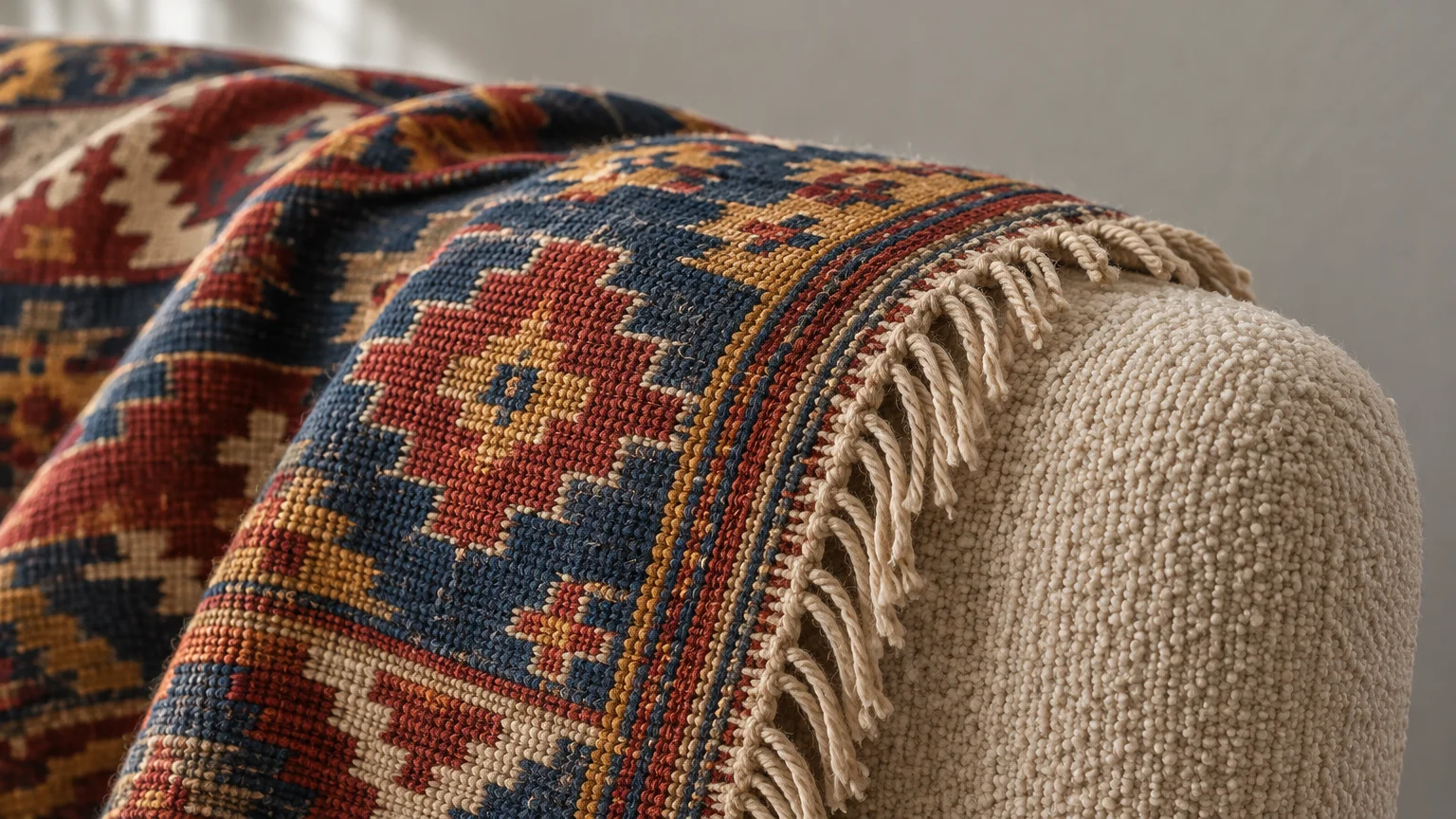
Nothing softens sleek architectural steel or glass faster than worn Turkish kilims, crewelwork pillows, and velvet armchairs. Yet porous vintage textiles absorb indoor moisture greedily, creating microscopic habitats if your climate slips out of range.
Dust mites thrive and mold spores germinate once indoor relative humidity climbs past 55% to 60%. Delicate silk trims, wool tapestries, and antique horsehair stuffing suffer permanent staining and fiber rot when damp air stagnates inside heavy weaves.
Balance delicate heirloom textiles with washable modern performance fabrics on your highest-traffic seating. Reserve fragile antique embroidery for low-contact throw pillows or framed textile art rather than daily-use sofa cushions.
Vacuum vintage rugs gently through a protective nylon screen using reduced suction and a HEPA-filtered canister rather than an aggressive beater bar. Weekly dust removal starves mites and lifts abrasive grit that slices wool fibers underfoot.
For budget-friendly protection on heirloom upholstery, stitch removable linen arm covers or drape lightweight cotton throws over exposed seat backs. Washable layers absorb skin oils and seasonal humidity spikes before grime settles deep into irreplaceable vintage weave.
6. Upgrade Window Treatments to Defend Delicate Finishes
Controlling Light and Heat Without Sacrificing Style
Sun-drenched rooms showcase patina beautifully, yet unfiltered daylight fades aniline dyes, bleaches mahogany, and bakes modern leather dry. Designing smart window layers lets you celebrate natural views while shielding fragile mixed-era pieces.
Follow conservation lighting benchmarks whenever you arrange antique woodwork near windows. The National Park Service recommends keeping illumination below 200 lux for most finished wooden furniture and under 300 lux for unfinished wood.
Heat multiplies light damage rapidly when afternoon sun hits unconditioned glass. High heat combined with high relative humidity can soften aged shellac or varnish until antique tabletops turn permanently tacky to the touch.
Pair crisp modern roller shades with flowing linen drapery to achieve soft, museum-grade light filtering. Sheer weaves diffuse harsh glare without plunging your living space into gloom, letting sculptural mid-century lamps shine cleanly.
If sheer curtains clash with minimalist architecture, apply optically clear UV-blocking window film directly onto sunlit panes. You preserve raw steel window frames while blocking ultraviolet radiation before it reaches heirloom sideboards or modern rugs.
Rotate decorative objects, wooden bowls, and stacked art books across sunlit coffee tables every few months. Regular rotation guarantees even mellowing across timber tops instead of leaving pale ghost silhouettes behind.
7. Screen Pre-1978 Paint, Tip-Over Risks, and Cribs First
Essential Safety Checks Before Styling Vintage Finds
True designer confidence never sacrifices household safety for an enviable patina. Before moving flea-market treasures into living spaces or bedrooms, perform three non-negotiable inspections rooted in federal safety regulations.
First, test painted vintage woodwork for lead if its manufacture date predates 1978. Under Consumer Product Safety Commission regulation 16 CFR Part 1303, lead-containing paint was banned on household furniture made after February 27, 1978—initially capped at 0.06% and tightened in August 2009 to 0.009%, or 90 parts per million.
The EPA warns that chipping paint, friction-worn drawer runners, or dry-sanding and scraping pre-1978 finishes releases toxic lead dust into indoor air. Seal stable historic paint under clear protective coatings or hire certified professionals rather than sanding vintage dressers indoors.
Second, secure tall vintage dressers and chests firmly to wall studs. Under the STURDY Act—a mandatory CPSC rule applying to units made after September 1, 2023—new freestanding clothing storage at least 27 inches tall, weighing at least 30 pounds, and holding 3.2 cubic feet must pass strict anti-tip stability tests.
Older dressers lack those modern counterweights and interlocking drawer stops, creating serious hazards in active homes. Federal data recorded 217 tip-over fatalities between 2013 and July 2023, including 137 children, making discreet steel anti-tip brackets mandatory behind heirloom chests.
Third, keep vintage cribs strictly out of nursery design plans regardless of heirloom sentiment. Federal safety standards effective June 28, 2011 banned traditional drop-side cribs, meaning pre-2011 cribs remain unsafe, noncompliant, and illegal to resell—pair a compliant modern crib with an antique rocker instead.
8. Conceal Climate Gear and Cluster Houseplants Strategically
Integrating Hygrometers, Dehumidifiers, and Botanicals
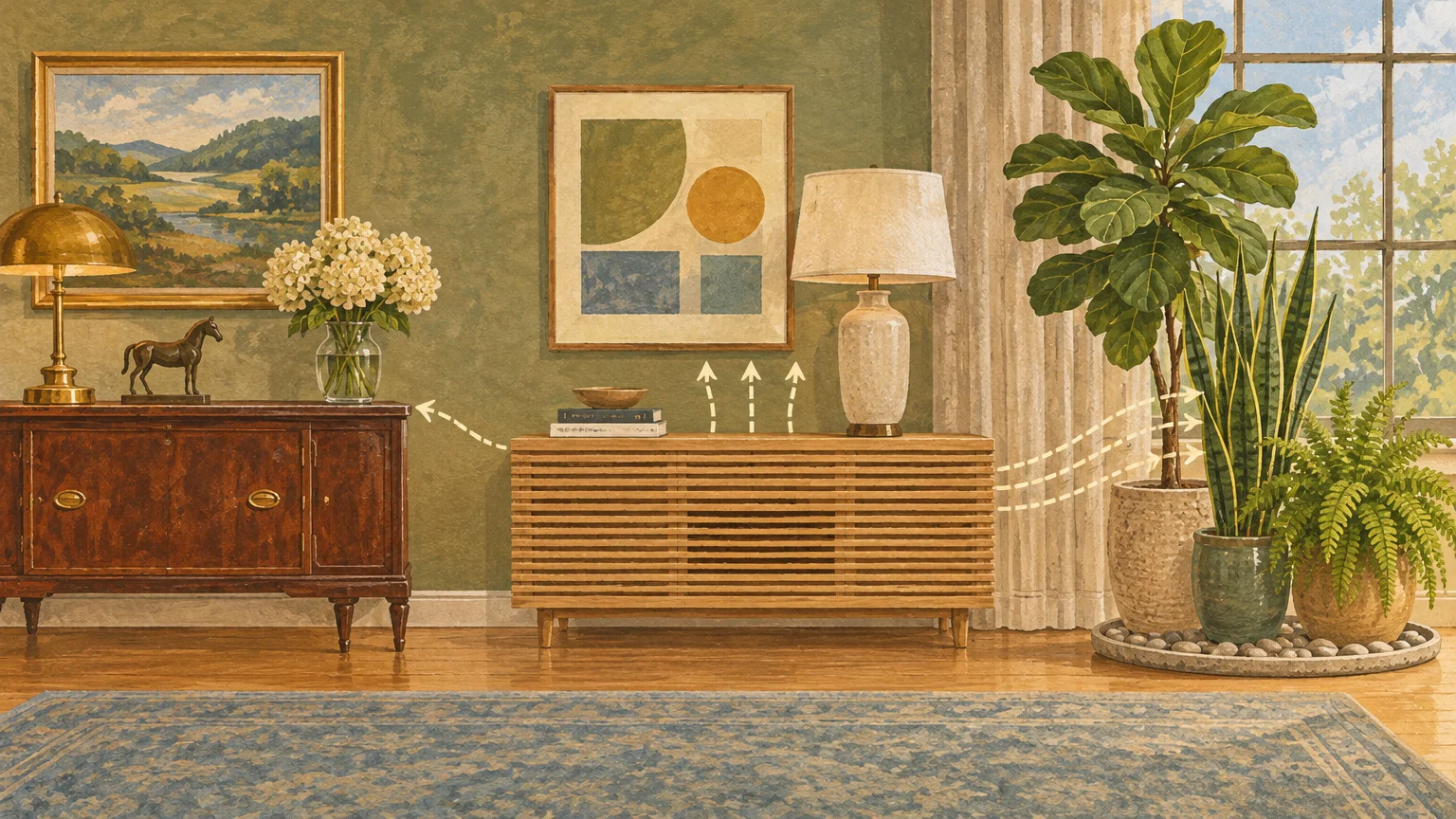
Living botanicals inject sculptural energy between rigid mid-century shelving and ornate Victorian frames. However, grouping leafy plants releases moisture directly into surrounding air, raising local humidity around nearby paper art and antique wood.
Group moisture-loving ferns or calatheas together on waterproof stone or ceramic trays set atop durable modern steel plant stands. Consult authoritative botanical care resources from the Missouri Botanical Garden to pair plant transpiration needs with your home’s natural humidity rather than forcing tropical specimens into bone-dry timber corners.
Keep potted palms and misted terrariums several feet away from pre-1940s veneered cabinets or unglazed pottery. Wipe stray water droplets immediately from waxed tabletops so white moisture rings never cloud old finishes.
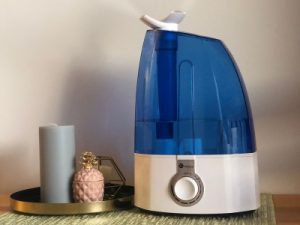
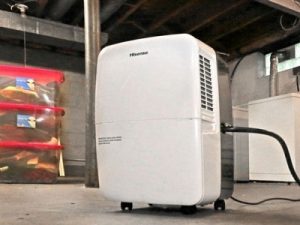
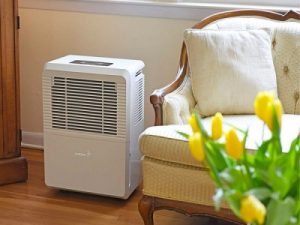
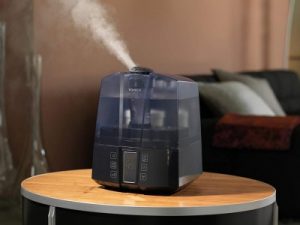
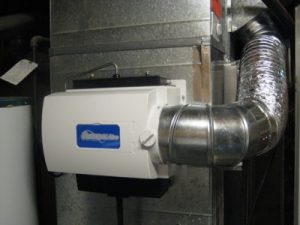
Climate control hardware works best when hidden gracefully inside your design plan. Tuck a quiet evaporative humidifier or sleek Energy Star dehumidifier behind a slatted modern bench or perforated credenza door that permits free intake and exhaust airflow.
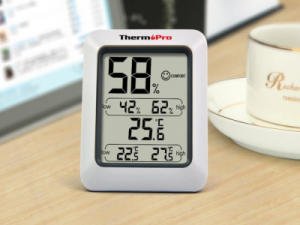
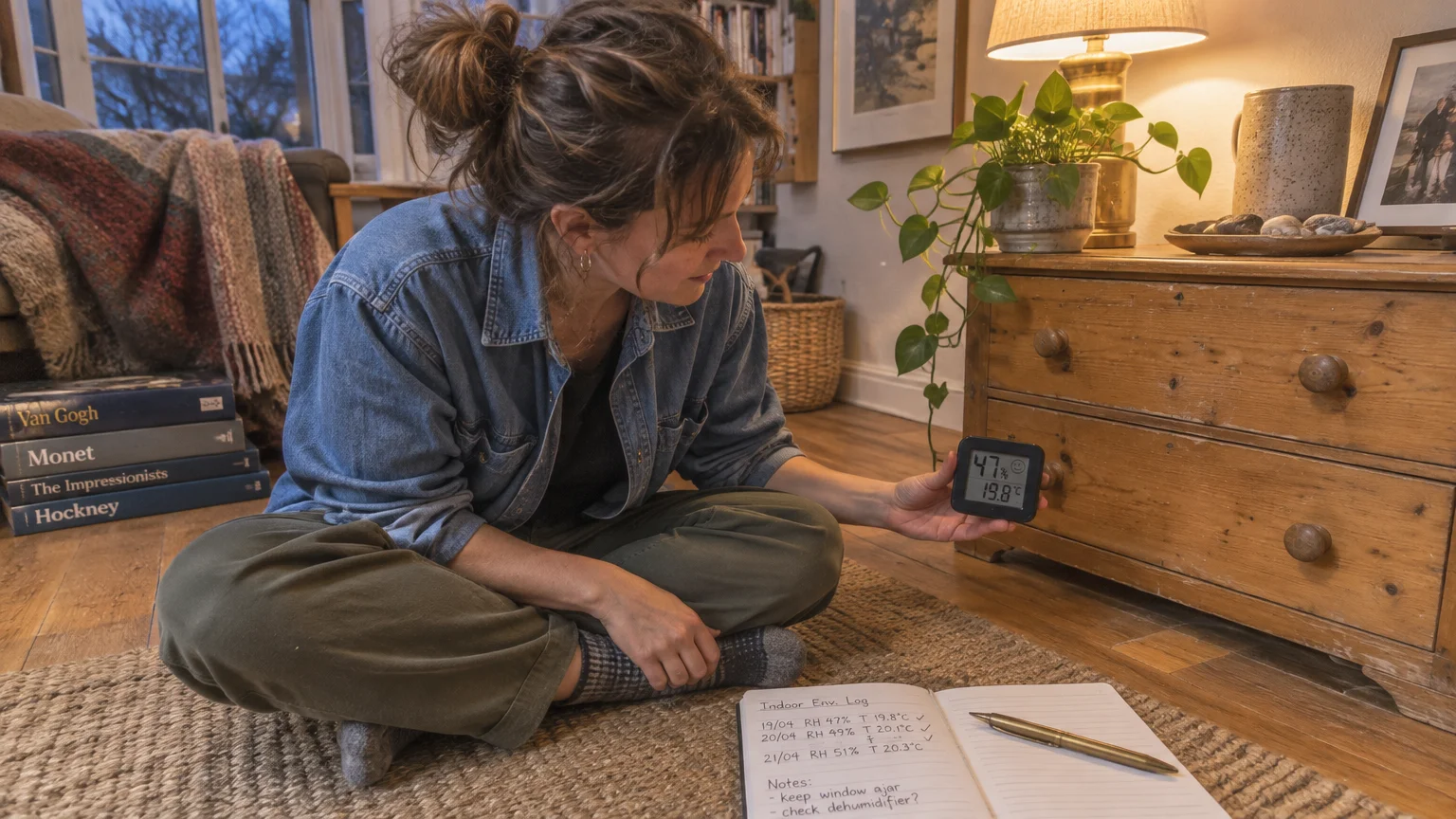
Place compact digital hygrometers at eye level on styled bookshelves beside brass candlesticks and art monographs. Monitoring real-time moisture takes two seconds daily, turning environmental preservation into an effortless styling habit.
Seasonal Refresh: Adjusting Decor and Humidity Year-Round
Winter Heating Season vs. Summer Monsoon Months
Your furniture faces two opposing environmental tests every calendar year. Adapting room textiles and mechanical controls seasonally protects delicate antiques without compromising everyday comfort.
During freezing winter months, indoor furnaces strip moisture sharply until rooms drop below 30% relative humidity. Wood planks contract along seams, hide-glue chair joints creak, and static shocks snap across velvet upholstery.
Deploy a clean evaporative humidifier sized for your square footage to hold living rooms safely within 30% to 50% relative humidity—or up to 60% if heating guidelines allow without window condensation. Always check cold window glass daily; persistent interior frost signals excess indoor moisture.
Summer heat and coastal storms invert that challenge completely, pushing indoor humidity past 55% toward mold-friendly zones. Run central air conditioning steadily or add portable dehumidifiers in damp garden-level rooms to block swelling drawers and musty textiles.
Embrace seasonal textile swaps as a stylish ritual that works alongside climate adjustments. Fold heavy winter wool throws into breathable cotton storage bags each spring, dressing modern sofas in crisp Belgian linen that releases moisture rapidly.
In arid desert climates, invest in sealed solid-wood furniture or buffered humidification trays rather than delicate French marquetry. Homeowners on tight budgets in humid coastal towns can seal leaky window weatherstripping first and monitor trouble rooms with inexpensive multipack hygrometers before upgrading HVAC equipment.
Frequently Asked Questions About Mixing Vintage and Modern Decor
How do I protect framed artwork and antique mirrors in a mixed-era room?
Maintain steady relative humidity between 40% and 55% and mount frames on interior walls away from steamy bathrooms or heat registers. Choose UV-filtering glazing for valuable paper works and add discreet rear bumpers so air circulates behind canvas stretchers.
Can I safely display heirloom solid-wood furniture near new engineered-wood shelving?
Yes, provided you maintain balanced ventilation and keep relative humidity below 50% to slow formaldehyde off-gassing from new particleboard or MDF. Allow at least 1.5 to 3 years for new composite pieces to release initial emissions while wiping adjacent antique surfaces with dry microfiber cloths.
Do indoor gardens ruin vintage wooden furniture or modern upholstery?
Houseplants only threaten furnishings when crowded directly against wood finishes or watered without drip saucers. Keep dense botanical groupings three to four feet away from pre-1940s veneers and monitor nearby shelves with a small digital hygrometer.
Will essential oil or reed scent diffusers damage antique wood finishes?
Ultrasonic mist diffusers deposit concentrated moisture droplets onto adjacent surfaces, while spilled essential oils or alcohol-based reed fluids dissolve antique shellac, wax, and lacquer instantly. Set diffusers on washable stone, ceramic, or glass trays well away from heirloom woodwork.
Audit One Room Today
You do not need museum budgets or total renovations to blend eras gracefully while protecting air quality. Pick your favorite living room or bedroom today and run a simple five-minute check.
Place a calibrated hygrometer away from direct sun, verify your furniture clearances, anchor tall vintage chests, and shift prized antiques off radiator paths. With smart airflow and balanced humidity on your side, your mixed-era sanctuary will age with enduring beauty.