Hidden moisture destroying your hardwood floors reveals itself long before catastrophic failure occurs, provided you know exactly what to look for. Identifying the early warning signs of sub-floor humidity saves you thousands of dollars in replacement costs and prevents serious indoor air quality hazards like hidden mold growth. Wood is a highly porous material that constantly absorbs and releases water vapor in response to your home environment. When the subfloor traps excess dampness, the resulting pressure warps the planks from underneath. Recognizing the physical and environmental clues of trapped moisture empowers you to intervene quickly. By understanding the interaction between your home climate and flooring materials, you protect your investment and maintain a healthy living space.
The Science Snapshot: How Moisture Interacts with Building Materials
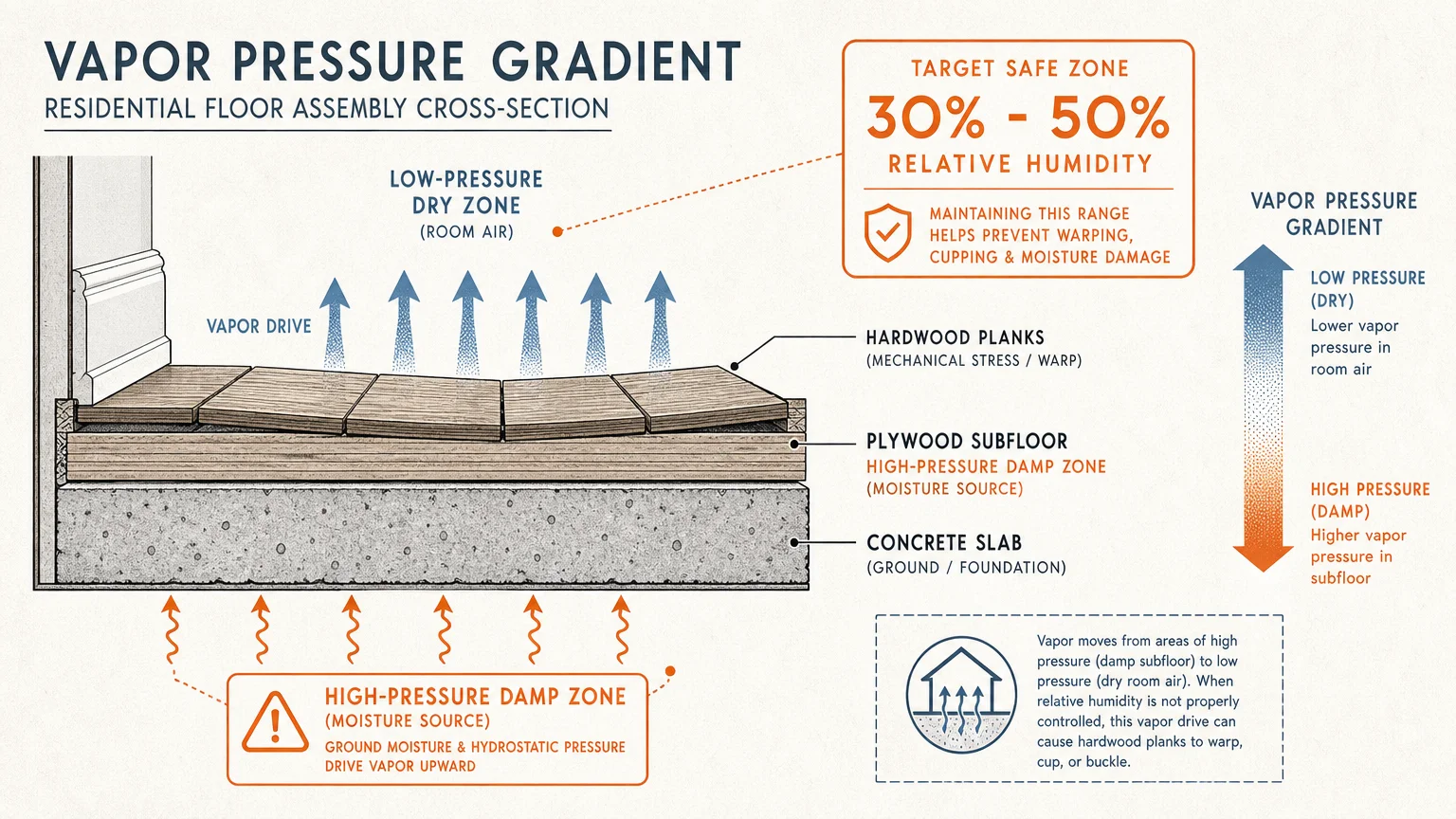
Hardwood planks act as dynamic sponges, constantly exchanging moisture with their surrounding environment to achieve equilibrium. This natural characteristic, known as the equilibrium moisture content, dictates that wood will expand when the ambient humidity rises and contract when the air dries out. Maintaining a stable indoor climate proves essential for preserving your flooring investment. When the indoor air remains conditioned and dry, but the crawlspace or basement below runs damp, a powerful vapor pressure gradient forms. Water vapor automatically migrates from the high-pressure damp zone toward the low-pressure dry zone.
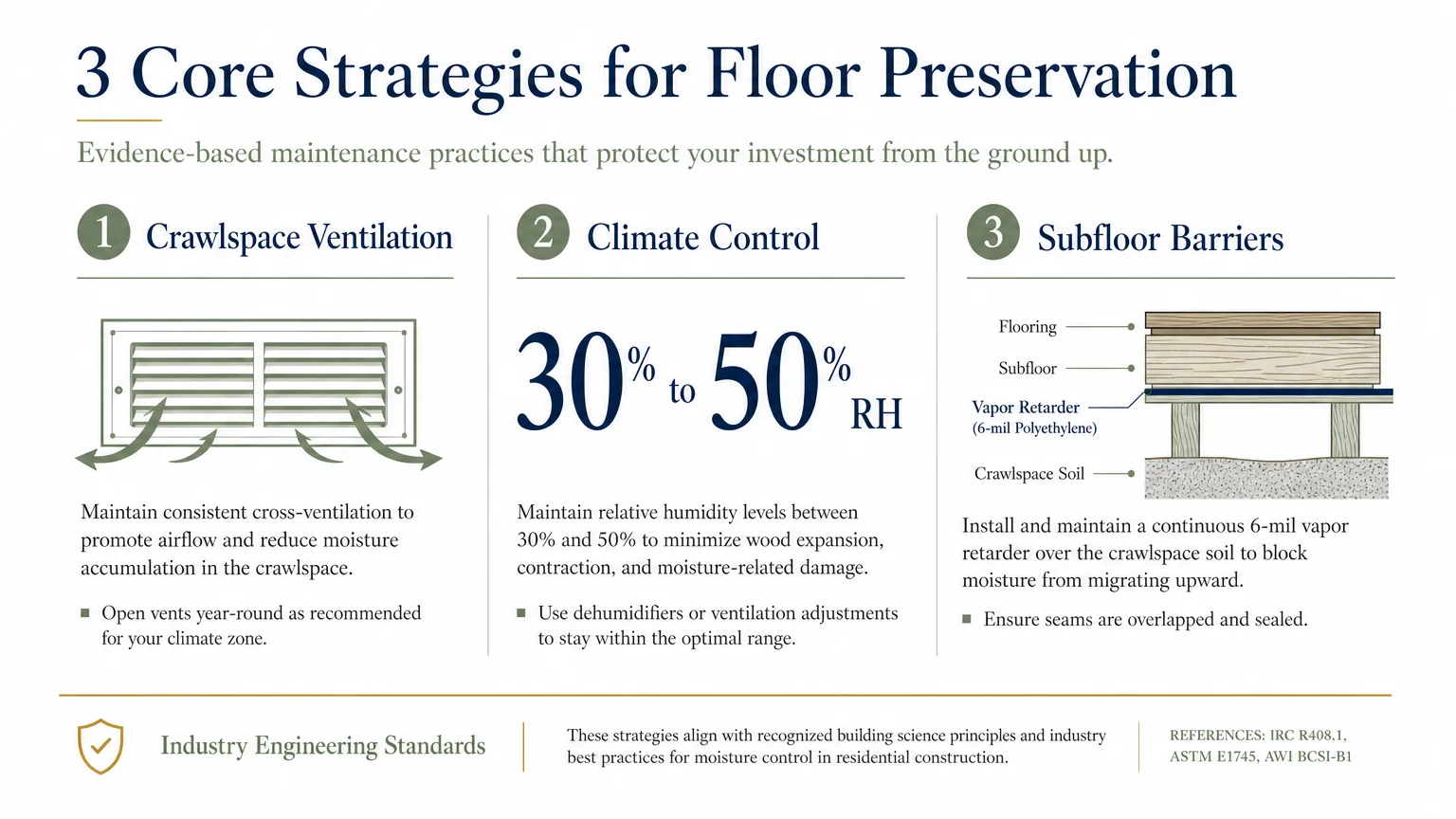
This upward vapor drive pushes moisture straight through concrete slabs, plywood subfloors, and oriented strand board, eventually colliding with the underside of your hardwood planks. The disparity between the saturated underside and the dry top surface creates immense mechanical stress across the cellular structure of the wood. You cannot overcome this fundamental law of thermodynamics with surface sealants or heavy nails. Controlling the atmospheric conditions above and below the floor remains the only viable strategy for long-term preservation. You should consult industry engineering standards for indoor environments to fully understand the importance of maintaining your relative humidity between thirty and fifty percent year-round.
6 Definite Signs of Moisture Under Your Hardwood Floors
1. Cupping Across the Planks
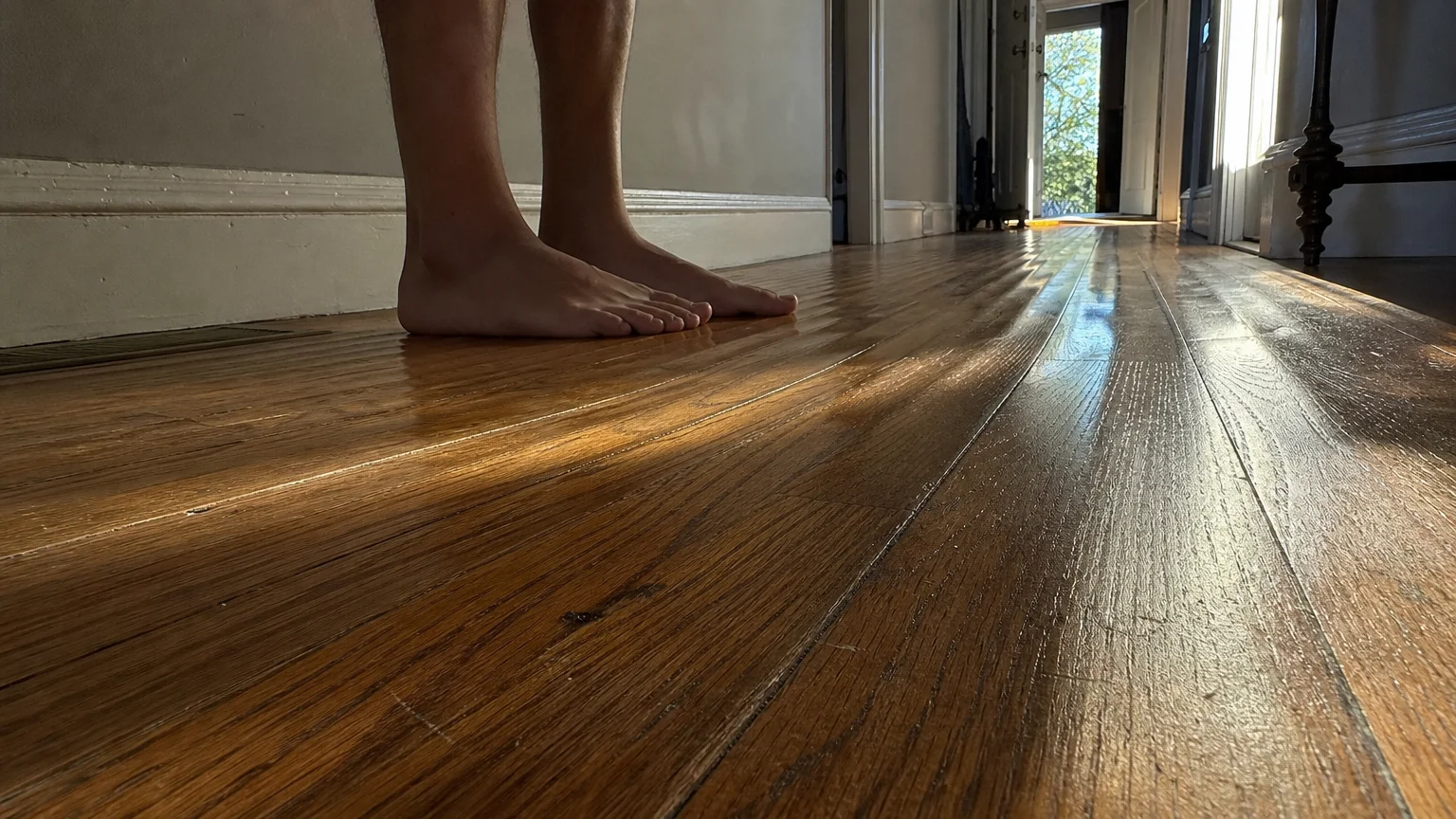
Cupping remains the most universal and immediate indicator of subfloor moisture. You will notice the long edges of individual hardwood boards rising higher than the center, creating a wavy, washboard texture across your floor. This physical distortion occurs because the bottom of the plank absorbs excess moisture from the wet subfloor and expands rapidly. Meanwhile, the top surface remains relatively dry due to your room’s ambient air conditioning. Running your bare feet across the floor easily reveals these sharp, raised ridges. Cupping points directly to a damp basement, an unventilated dirt crawlspace, or a slow plumbing leak seeping into the joists directly beneath the affected area.
2. Crowning in the Center
Crowning presents the exact opposite physical profile of cupping. The center of the hardwood plank swells and sits noticeably higher than the outer edges, forming a convex bump running down the length of the board. This condition frequently occurs due to a well-intentioned but disastrous maintenance error. Impatient homeowners or inexperienced contractors often sand down cupped floors before the underlying moisture problem fully resolves. When the subfloor finally dries out and the bottom of the boards shrink back to normal proportions, the previously sanded edges drop below the newly established center line. Crowning serves as a permanent physical record of a mismanaged moisture imbalance, typically requiring complete board replacement to fix.
3. Severe Buckling and Tenting
Buckling represents the most extreme, destructive, and dangerous stage of hardwood moisture damage. The planks physically pull away from the subfloor, lifting several inches into the air and tearing completely free from their mechanical fasteners or industrial adhesive bonds. The sheer hydraulic pressure of expanding wood fibers generates enough force to lift heavy furniture and shift structural baseboards away from the wall. Buckling rarely happens due to minor seasonal humidity fluctuations; it signals a catastrophic water event. Flooded basements, ruptured appliance supply lines, or entirely failed vapor barriers introduce massive volumes of water that saturate the wood far beyond its structural capacity to remain flat.
4. Unexplained Discoloration and Dark Spots
Visual chemical changes in your hardwood finish often precede severe physical warping. Dark spots, gray streaks, or blackening around the edges and ends of the planks indicate prolonged, relentless exposure to water. This insidious discoloration happens through two distinct mechanisms. First, natural tannins present in specific wood species—particularly white and red oak—react chemically with dissolved minerals in the invading water and the iron in the flooring cleats. This reaction creates deep, permanent black stains that penetrate the entire depth of the board. Second, chronic dampness provides a perfect breeding ground for fungal growth. Mold colonies take root on the underside of the planks and slowly consume the organic material, pushing their dark pigmentation upward through the wood grain.
5. Persistent Musty Odors
Your olfactory senses often detect subfloor moisture long before visual symptoms appear on the surface. A persistent, earthy, or musty odor lingering in a specific room points directly toward active microbial decay beneath your feet. Fungi and mildew thrive in the dark, damp, undisturbed space between your subfloor and the hardwood finish. As these microscopic organisms consume the wood fibers, they release microbial volatile organic compounds into your indoor air. Surface cleaning, carpet shampoos, and heavy air fresheners cannot mask this smell permanently because the biological source remains securely trapped below the flooring layer, continually off-gassing into your living space.
6. Spongy Movement or Squeaking
A properly installed hardwood floor feels entirely solid and completely silent underfoot. If you notice a spongy, yielding sensation when walking across a specific area, or if previously quiet floors suddenly develop severe squeaks, you are experiencing advanced structural degradation. Chronic moisture exposure destroys the structural integrity of plywood and oriented strand board subfloors. The continuous water intrusion dissolves the industrial adhesives holding the subfloor materials together, turning rigid wooden panels into a soft, fibrous mush. The localized squeaking results from the hardwood planks rubbing aggressively against loosened flooring nails as the entire degraded floor assembly loses its mechanical grip.
Strategy Pillars for Managing Floor Humidity
Implementing Active Monitoring Solutions
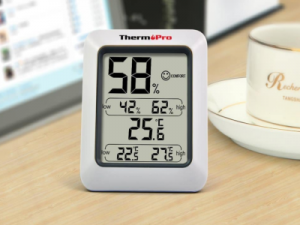
Implement active monitoring to catch humidity spikes before they cause permanent wood deformation. Place digital thermo-hygrometers in your primary living spaces, basements, and crawlspaces to track relative humidity continuously. Modern sensors integrate seamlessly with smartphone applications, alerting you instantly via push notifications when basement moisture levels exceed the safe threshold of fifty percent. Establish a routine of checking these metrics weekly alongside your normal house cleaning schedule. For targeted diagnostics, purchase a pinless dielectric moisture meter. These handheld devices use high-frequency electromagnetic fields to scan the internal moisture content of your flooring up to three-quarters of an inch deep. Pinless meters allow you to accurately map out hidden wet zones across your floor without driving metal probes into the finished wood surface, preserving the flawless aesthetic value of your investment.
Utilizing Mechanical Humidity Control
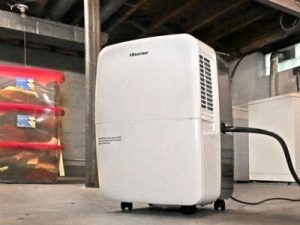
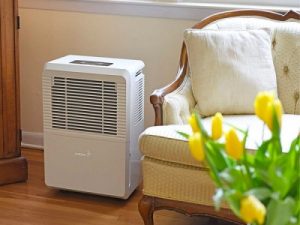
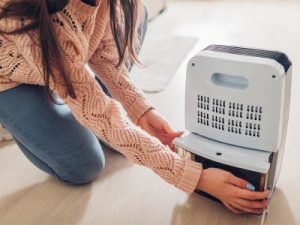
Deploy aggressive mechanical interventions to break the vapor drive threatening your home. Unsealed crawlspaces demand professional encapsulation to stop ground moisture evaporation. Install a heavy-duty twenty-mil cross-woven plastic vapor barrier directly across the bare earth, sealing it securely against the foundation walls and wrapping the structural support piers. Pair this physical shield with a dedicated, commercial-grade dehumidifier rated for continuous low-temperature operation. By constantly pulling water vapor out of the crawlspace or basement air, you drastically lower the vapor pressure beneath your home. This mechanical drying process protects the structural integrity of your subfloor and stops upward moisture migration entirely. Verify equipment efficiency by consulting certified residential dehumidification systems to ensure optimal energy performance and adequate pint-per-day moisture removal capacity.
Practicing Preventive Maintenance and Sealing
Preventive maintenance outside your home dramatically reduces moisture threats inside your walls and floors. Control the trajectory of rainwater around your foundation to prevent subterranean saturation. Clean your gutters thoroughly every autumn and spring to prevent overflow from cascading directly down your exterior walls. Attach solid extensions to all downspouts, directing the heavy roof runoff at least six feet away from the foundation perimeter. Assess your landscape grading and ensure the soil slopes aggressively downward, carrying surface water away from the house. A drop of six inches over the first ten feet provides optimal drainage. If you have a concrete slab foundation, apply high-quality penetrating sealers before installing any new flooring. These specialized epoxy sealers block capillary action, preventing the highly porous concrete from wicking groundwater upward into the hardwood adhesive layer.
Expert and Homeowner Voices on Flooring Preservation
Veteran indoor air quality specialists and seasoned flooring inspectors constantly encounter the devastating financial results of ignored subfloor humidity. An inspector evaluating a ruined oak floor in a humid coastal climate will quickly point past the expensive wood and look directly toward the unconditioned crawlspace below. The hardwood floor simply acts as a massive, highly sensitive gauge for the overall health of the home foundation. Homeowners often spend thousands of dollars on premium exotic hardwoods while completely ignoring the damp dirt basement directly beneath their living room. When the humid summer air collides with the naturally cool soil, condensation immediately coats the floor joists. The moisture has nowhere to go but up into the subfloor. Correcting the harsh environment below the floor remains the only permanent, structurally sound solution to preserving the valuable aesthetic material installed above it.
Safety and Caution: Hidden Health and Structural Risks
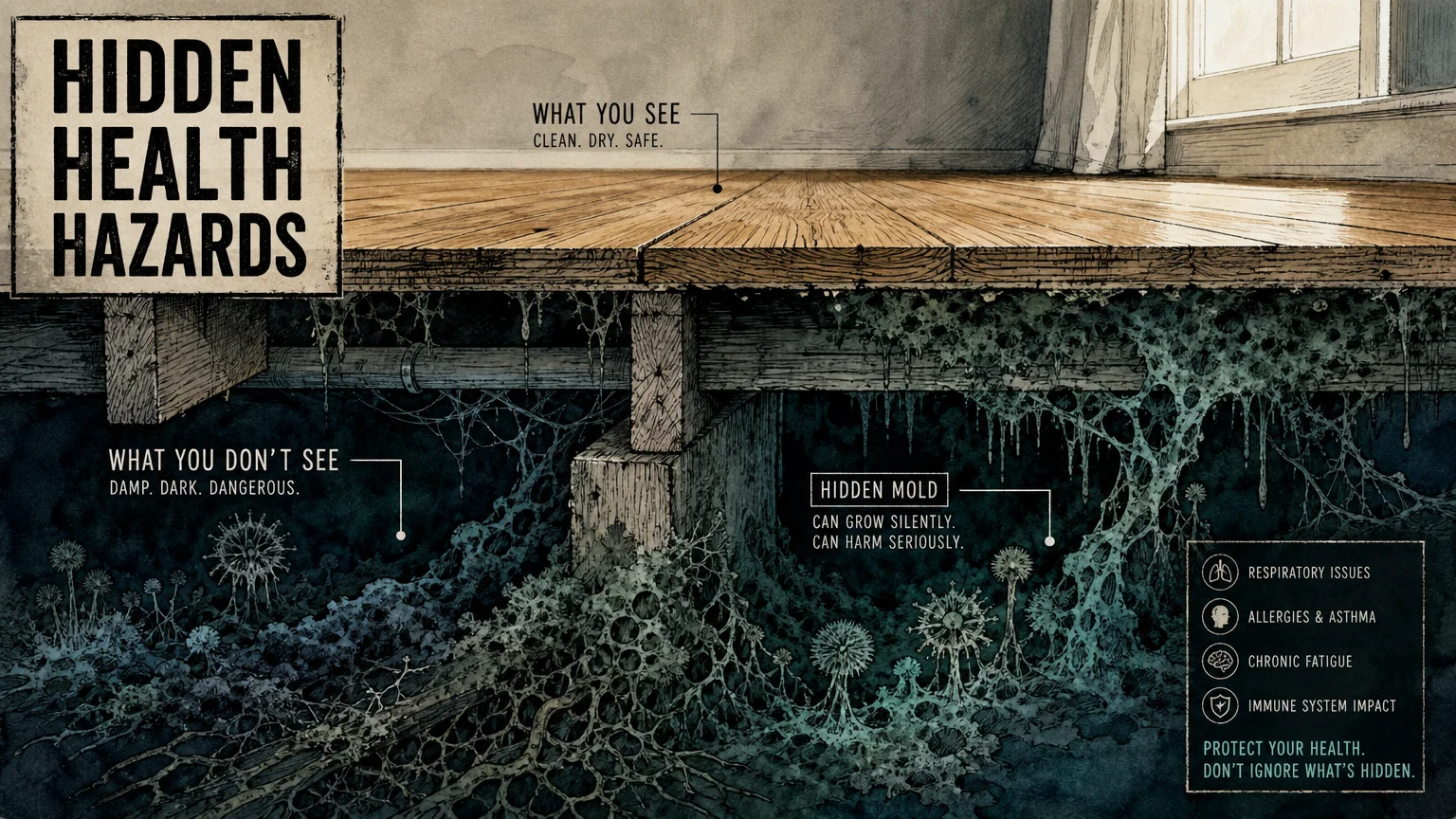
Hidden subfloor moisture creates severe health hazards and staggering structural liabilities that demand immediate attention. Dark, saturated cavities between floor joists create the ideal ecosystem for dangerous mold species, including Stachybotrys and Aspergillus. As these fungal colonies mature, they release mycotoxins and millions of microscopic spores into your breathing zone, triggering severe respiratory distress, asthma attacks, and chronic allergic reactions. For comprehensive safety protocols, review public health information regarding indoor mold exposure to understand the profound medical risks associated with unmitigated fungal growth.
Beyond dangerous biological threats, wet wood inevitably attracts highly destructive pests. Subterranean termites, powderpost beetles, and carpenter ants aggressively seek out damp timber, quickly compromising the primary load-bearing capacity of your home framework. If your subfloor moisture results from a massive plumbing failure, an overflowing appliance, or regional flooding, abandon do-it-yourself drying attempts immediately. Hire a certified water damage restoration professional equipped with structural drying fans and commercial desiccants to properly salvage your home infrastructure before rot sets in.
Frequently Asked Questions About Subfloor Moisture
Can severely cupped hardwood floors flatten out and return to normal?
Yes, cupped floors often return to their original flat profile if you eliminate the moisture source quickly. Once you completely dry out the subfloor and stabilize the indoor humidity, the wood fibers slowly release their trapped water and contract back to their normal dimensions. This natural drying process requires extreme patience and often takes several months to complete depending on the thickness of the planks. Never attempt to sand a cupped floor flat while the wood remains wet, as this guarantees permanent crowning once the material finally acclimates to a dry environment.
How do professionals test a concrete subfloor for moisture before installing hardwood?
Contractors utilize anhydrous calcium chloride tests or advanced in-situ relative humidity probes to measure concrete vapor emissions accurately. The calcium chloride method measures the exact weight of water vapor evaporating from a specific section of the slab over a strict seventy-two-hour period. In-situ probes require drilling small test holes directly into the concrete to measure the internal relative humidity of the slab itself. These precise measurements dictate whether the concrete slab requires a specialized vapor-retarding epoxy before the hardwood installation begins. Check federal guidelines on moisture control for comprehensive, science-based strategies on managing concrete slab emissions.
Does standard homeowners insurance cover hardwood floor replacement due to moisture damage?
Insurance coverage depends entirely on the specific source, timeline, and suddenness of the water intrusion. Policies typically cover sudden, accidental events like a burst pipe flooding the living room, a ruptured water heater, or a sudden appliance malfunction. However, insurers almost universally deny claims related to gradual damage, ignored plumbing leaks, or chronic ground moisture rising slowly from a damp crawlspace. You bear full financial responsibility for maintaining the long-term environmental conditions beneath your home and preventing gradual humidity damage.
Should I apply a thick coat of polyurethane to seal my floors and block moisture from entering?
Applying topical surface sealants will never resolve an underlying subfloor moisture problem. Hardwood floors must retain their natural ability to breathe and exchange moisture with the ambient air. Coating the top surface with thick, impermeable polyurethane while the bottom remains exposed to a damp subfloor actually accelerates the physical destruction. The heavy finish traps the rising water vapor inside the planks, causing the wood to rot entirely from the inside out and forcing the polyurethane layer to peel and blister aggressively. Always address the moisture source beneath the floor rather than attempting to seal the visible surface.
Take Action to Protect Your Flooring Investment
Protecting your beautiful hardwood floors requires proactive vigilance rather than reactive, expensive repairs. Take immediate control of your indoor environment by evaluating your subfloor atmospheric conditions today. Purchase a reliable digital hygrometer and place it directly on the floor in the room you suspect holds the most trapped moisture. Monitor the diagnostic readings for twenty-four hours to determine if your relative humidity regularly exceeds the safe threshold of fifty percent. If the baseline numbers run high, immediately inspect your basement or crawlspace for standing water and verify that your exterior downspouts are discharging well away from the foundation wall. Addressing a minor humidity imbalance today ensures your hardwood floors remain visually flawless, structurally sound, and perfectly safe for decades to come.